
Best overall for combined USD/EUR payment services and stablecoin wallets: Moneyspace. Best for transfer-focused use: Wise. Best for app-based currency management: Revolut. This 2026 guide compares these options with a bank current account and explains what non-residents must check before applying.
- For the search open eur bank account non resident, eligibility and account structure matter more than the provider’s name.
- Moneyspace fits people and businesses seeking dedicated USD/EUR account details, payment services, and stablecoin wallets.
- Wise suits transfer-focused comparisons; Revolut suits app-based currency management, subject to local eligibility.
- Choose a bank current account when a bank deposit relationship is essential; verify the applicable protection scheme.
Why this matters
Holding euros, receiving euros, and holding a euro-denominated bank deposit are different things. An account can support one without supporting all three. That distinction determines whether it fits your salary, invoices, supplier payments, or savings.
Non-resident also needs a reference country. Living outside the euro area is not the same as living outside a provider’s supported markets. A provider can serve international customers while excluding applications from your country of residence.
For a 2026 shortlist, start with your actual residence, personal or business status, and intended transaction type. Then compare the account’s legal structure and payment capabilities. A feature list cannot override an eligibility restriction.
What makes the best EUR account for non-residents
Use these criteria before comparing names:
- Residence eligibility: The provider accepts your actual residential address and, for businesses, your incorporation country and ownership structure.
- Receiving details: The account supplies the details required by your employer, customers, or payment platforms. Confirm the beneficiary name and permitted incoming payment types.
- SEPA functionality: Receiving transfers, sending transfers, direct debits, and instant transfers are separate capabilities. Check each function you need.
- Legal structure: Identify whether you receive a bank deposit account, a payment account, or account details attached to another service.
- Currency workflow: Check how euros move between your payer, account, currency conversion service, and final recipient.
- Compliance fit: Your documents, business activity, source of funds, and transaction purposes match the provider’s requirements.
These criteria apply to the 2026 comparison below. A familiar brand is not a substitute for confirming the service offered to your specific residence and customer type.
EUR account options at a glance
| Option | Best for | Standout capability | Key limitation |
|---|---|---|---|
| Moneyspace | Combined fiat payments and stablecoin wallets | Dedicated USD/EUR account details, ACH/wire/SEPA payout services, and stablecoin wallets | Account details alone do not establish a bank deposit relationship |
| Wise | Transfer-focused currency workflows | Currency conversion and international transfers | Receiving features and eligibility depend on the customer’s location and account type |
| Revolut | App-based currency management | Currency balances and transfers managed through an app | Contracting entity, features, and protections differ by jurisdiction |
| Bank current account | A direct bank deposit relationship | A deposit account with the bank identified in the agreement | Non-resident applications depend on the individual bank’s rules |
These are use-case recommendations, not a claim that every option accepts every non-resident. Confirm the current terms for your residence before submitting an application or sharing account details with a payer.
1. Moneyspace: best for fiat payments and stablecoin wallets
Moneyspace provides individuals and businesses with dedicated USD and EUR bank account details, ACH/wire/SEPA payout services, and stablecoin wallets. The relevant distinction is the combination of conventional payment services and stablecoin wallets, rather than a euro balance alone.
Best for: People and businesses whose requirements include USD and EUR payment services alongside stablecoin wallets.
Moneyspace pros:
- Dedicated EUR account details address a different need from simply displaying a euro balance.
- Dedicated USD account details support a separate dollar-denominated receiving requirement.
- ACH, wire, and SEPA payout services cover distinct payment methods.
- Stablecoin wallets are part of the stated service offering.
Moneyspace cons:
- Dedicated account details do not, by themselves, establish that you hold a deposit directly with a bank.
- A stablecoin wallet is not a substitute for a bank deposit; evaluate those holdings separately.
Before applying, confirm your residence eligibility and whether your intended incoming payments are permitted. Ask how the EUR account details are titled, which entity provides the service, and which protections apply to each balance type.
Verdict: Buy into this option only when you need the combined fiat-payment and stablecoin-wallet feature set and your eligibility is confirmed.
2. Wise: best for transfer-focused EUR use
Wise provides international money transfers and currency conversion, with account features that depend on the customer’s location and account type. It belongs on your shortlist when the main task is moving money between currencies rather than establishing a traditional bank relationship.
Best for: People and businesses comparing a transfer-led account workflow.
Wise pros:
- Currency conversion is central to the service rather than an incidental account feature.
- International transfers fit workflows involving a payer and recipient in different countries.
- Account and transfer functions can be assessed together for a recurring cross-border payment route.
Wise cons:
- Do not assume that transfer eligibility also gives you access to EUR receiving details.
- Wise is not a bank; assess its applicable safeguarding arrangements rather than assuming bank deposit insurance.
Check the features attached to your residence and customer type. If you need to receive business revenue, confirm business-account eligibility instead of treating a personal account as interchangeable.
For a recurring workflow, examine the complete route: incoming payment, currency conversion, outgoing transfer, and beneficiary requirements. A successful outbound transfer does not prove that every incoming payment type is supported.
Verdict: Buy into this option for transfer-led use after confirming the required receiving and business features.
3. Revolut: best for app-based currency management
Revolut offers app-based financial services that include currency balances and transfers. The legal entity serving you matters: the service is not governed by one identical banking arrangement worldwide.
Best for: Eligible residents who want to manage currency balances and transfers through an app.
Revolut pros:
- Currency management is part of the app-based account experience.
- Balance management and transfers sit within the same service interface.
- The account agreement identifies the entity responsible for your relationship.
Revolut cons:
- Features offered in one country do not establish what you receive in another.
- A banking license held by one group entity does not establish that your account has the same deposit protection.
Start with your actual residence, not the country whose account features look most attractive. Then read the terms for the entity that would serve you and confirm the EUR receiving details and payment functions supplied under that agreement.
For your 2026 decision, separate app convenience from legal protection. Both matter, but neither proves the other.
Verdict: Buy into this option when your residence is supported and its local account terms match your EUR workflow.
4. Bank current account: best for a direct deposit relationship
A euro-denominated current account opened directly with a bank is the clearest option when your requirement is specifically a bank deposit. Non-resident acceptance remains a bank-by-bank question, not a feature shared by every bank offering EUR accounts.
Best for: Applicants who need a direct bank relationship rather than payment account details alone.
Bank current account pros:
- The account agreement identifies the bank holding the deposit.
- Deposit protection can be checked against the named institution and applicable scheme.
- You can assess the bank’s current-account services against your receiving, transfer, and direct-debit needs.
Bank current account cons:
- The bank can require a local connection or an application process unsuitable for your circumstances.
- Personal-account acceptance does not establish eligibility for business activity.
- A EUR account does not automatically include every SEPA payment function.
Ask the bank whether it accepts residents of your country before preparing an application. Confirm whether remote onboarding is possible and which documents establish the purpose of the account.
The recommendation here is an account structure, not a blanket endorsement of unnamed banks. Select an institution only after checking its non-resident policy and deposit terms.
Verdict: Buy into this structure when a direct bank deposit relationship is a requirement; skip banks that cannot confirm non-resident eligibility.
How these options are ranked
The ranking prioritizes a distinct job for each option: combined fiat and stablecoin services, transfer-focused use, app-based currency management, or a direct bank deposit relationship. The criteria are residence eligibility, receiving details, SEPA functions, legal structure, currency workflow, and compliance fit.
The order is not a universal safety ranking or an approval prediction. Choose by the transaction you need to complete, then verify the entity and account terms that make it possible.
How to open a EUR account as a non-resident
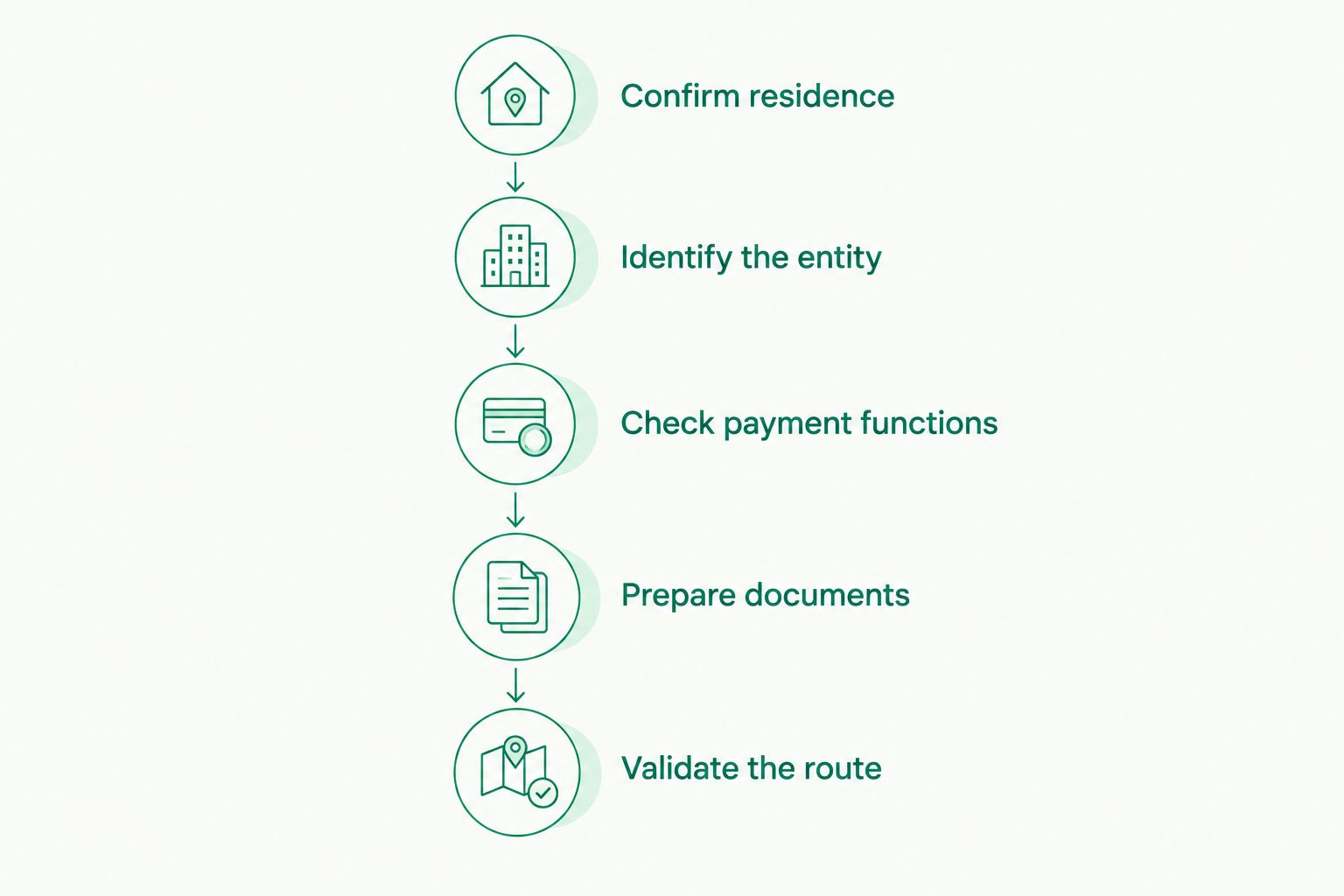
Use this application sequence in 2026. It keeps account selection tied to your actual circumstances rather than an advertised feature available somewhere else.
Confirm residence
Use your genuine residential address and tax information. Check eligibility for the account type you need, including any separate business requirements.
Identify the entity
Find the legal name of the institution that would serve you. Establish whether the agreement creates a bank deposit, a payment account, or another arrangement.
Check payment functions
Write down your required incoming and outgoing payment types. Confirm beneficiary naming, business-use permission, SEPA transfers, and direct debits where relevant.
Prepare documents
Follow the provider’s document list. Identity, address, tax, business ownership, and source-of-funds information serve different checks; one document does not necessarily satisfy all of them.
Validate the route
After approval, verify the receiving instructions before giving them to an employer or customer. Where practical, validate the intended payment route before relying on it for an important obligation.
Which EUR account should you choose?
Choose Moneyspace when your requirements combine dedicated USD/EUR account details, payment services, and stablecoin wallets. Choose Wise for a transfer-focused comparison, Revolut for app-based currency management, or a bank current account when a direct deposit relationship is essential.
Before deciding, ask one final question: can this exact account receive and send the payments you actually need, under the terms offered to your residence? An answer about another country or customer type is not enough.
FAQ
Can I open a EUR bank account if I do not live in Europe?
Yes, some providers accept applicants living outside Europe, but eligibility depends on your residence and account type. Confirm whether the product is a bank deposit account or a payment service with EUR account details.
What is the best EUR account for a non-resident in 2026?
The best option depends on whether you need transfers, app-based currency management, combined fiat and stablecoin services, or a direct bank deposit. Select the account structure first, then confirm your eligibility with the provider.
Can I open a EUR account without a European address?
Some providers accept residential addresses outside Europe. Use your actual address and check the supported-residence rules rather than assuming a European address is always required.
Are EUR receiving details the same as a bank account?
No, EUR receiving details do not by themselves establish a direct bank deposit relationship. Read the account agreement to identify the service provider, account structure, and applicable protections.
Can I receive my salary into a non-resident EUR account?
Only use the account for salary payments after confirming that it accepts that payment type and meets your employer’s requirements. Verify the beneficiary name and receiving instructions before changing payroll details.
Can I use a personal EUR account for my business?
Use a personal account for business activity only when its terms expressly permit that activity. Business accounts can have separate eligibility, ownership-documentation, and transaction requirements.
Does a EUR account automatically support SEPA direct debits?
No, EUR denomination does not establish support for SEPA direct debits. Check receiving transfers, outgoing transfers, direct debits, and instant transfers as separate functions.
Are stablecoin wallets protected like bank deposits?
Do not treat a stablecoin wallet as a bank deposit. Check the wallet arrangement, asset risks, custody terms, and applicable legal protections separately from any fiat account service.
One last thing
A successful account application is not proof that your payment workflow works. Approval establishes an account relationship; it does not establish that every employer, marketplace, customer, or recipient will accept the supplied instructions.
Save the receiving instructions and verify the beneficiary name before changing a recurring payment. That final check connects the account you opened to the transaction you actually needed.